How does it feel to come full circle?
When we come full circle, there is often the feeling that we have arrived in a familiar place, but that we ourselves are somehow different.
I felt the same as I was pacing across the highlands of Pachmarhi, a tiny hamlet in the heart of India, with my students. 16 years have passed, but the landscape did not change much, except that I have changed, personally, a lot.
It had been nearly 2 months since I was teaching an undergraduate course called ‘Introduction to Biodiversity and Conservation’. The course is housed under the regular BSc in Biology program, but with a distinct career in biodiversity in sight. In fact, the courses offered here are not very conventional, at least not in the sense in which I studied Botany.
Back then, one of the perks of taking Botany as a major was an educational field trip to a distant location as part of the course under the supervision of one or two faculty members. For many of us, the field trip, or the excursion, as we called it, was our first outstation trip without our parents. The ‘excursion’ meant our ‘freedom’ to live that one week without any supervision.
For Memories Forged When Stars Align
I often wondered how our teachers felt when they took us on these field trips. We never asked them. When the time came for me to experience a field trip as a teacher, I had very few options. I started my teaching career with a quantitative biology course that had little or no scope for a field trip (read that experience here). The opportunity came at the end of my first year as a teacher: me supervising 21 students on a field trip.
Just to be clear here, the course curriculum does not have a mandate for a field trip, certainly not for an overnight one.
Field-based activities will involve observations and documentation of biodiversity in one’s surroundings. This will also involve a field visit to a nearby protected area or a zoo, and discussing the topics related to conservation approaches and career opportunities.
Scope of the field visit as outlined in the Course Document
But my sense was different. The students may gain subject knowledge by visiting a zoo or a nearby park, but spending overnight with their peers outside their comfortable and supervised environments (in this case, the university hostel, which has become their second home for the last year) can have several developmental benefits for them. It might help them gain some social skills, foster friendships, and build empathy, understanding, and trust for each other. Trekking through rough terrains for a day would make them a little bit more resilient and adaptive to the challenges, a lot of which life will throw at them within the next three years and beyond. And more importantly, an overnight ‘excursion’, going to be the first in their lives, would create everlasting memories.
And that’s exactly what happened.
Day 1.5
Navigating a conundrum
It took us six long hours to reach Pachmarhi from Bhopal. ‘Us’ means the students, me, one academic associate, my research assistant, and two faculty members from the same program. By road, Pachmarhi lies 4 hours from Bhopal. But we were travelling in a school bus with a speed restriction, so 4 became 6. But I couldn’t complain. The field trip was unaccounted for in the academic program budget. The idea of this non-budgeted event was welcomed by the university, and a school bus was provided to us at a minimal cost.
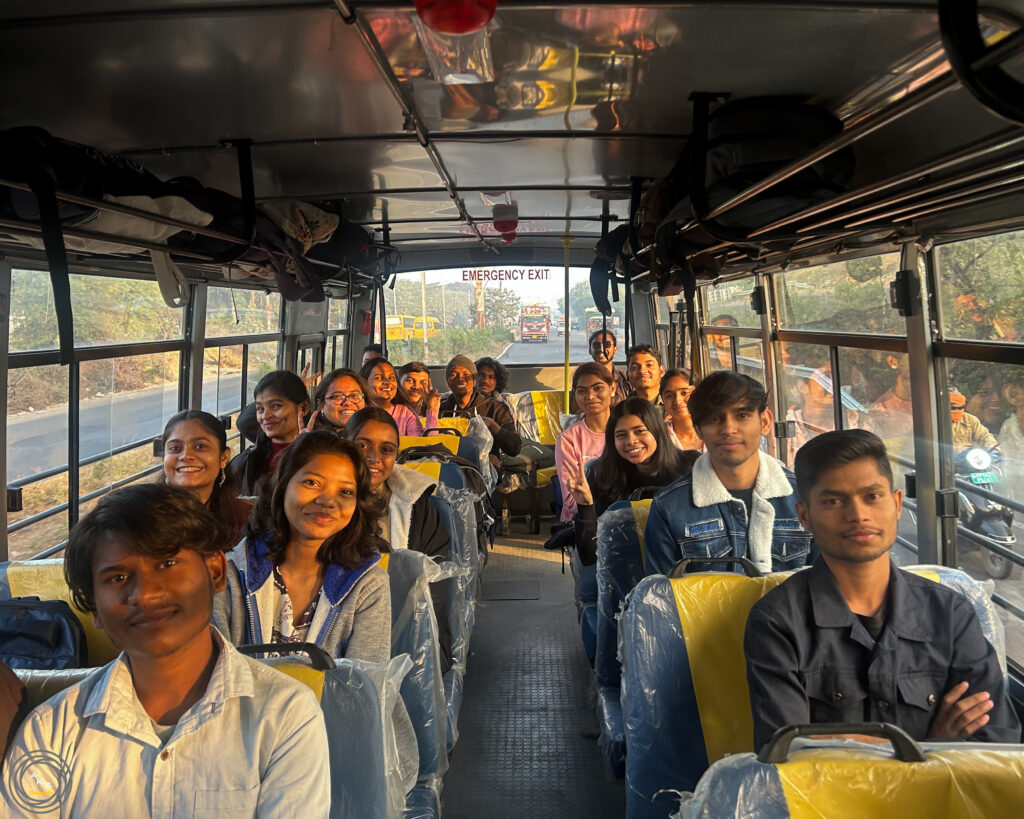
The other two faculties, both female, accompanied us to enjoy Pachmarhi and thus relieved themselves from the supervisory capacities. But as one person put it correctly:
A female teacher is better suited than her male counterpart to chaperone or provide support to a girl student, particularly in a field trip, extracurricular activities, or even just offering a helping hand.
I agreed and welcomed my female colleagues to the party.
Planning for the activities
As this was my first field trip as a teacher, I took utmost care to design the activities and took all possible help from the academic associate and my research assistant. I arranged accommodation and food at the field station of the National Centre for Biological Sciences (NCBS). It was not only cheaper than any hotel in a popular tourist spot like Pachmarhi, but also gave me a chance to interact with the person in charge of the field station, Dr. Savita Chib, an accomplished scientist with a vast knowledge of the local landscape. In one of our conversations, she mentioned
Since your visit is relatively short, it is better to go for outdoor excursions to learn about the landscape and vegetation. I could recommend some short hikes that will maximize the experience and minimize the cost.
I was in constant touch with her for such practical suggestions, and honed the field trip plan accordingly. I just couldn’t guess that my plans were somehow merging with a grand plan to take me back to the same trail I walked 16 years ago.
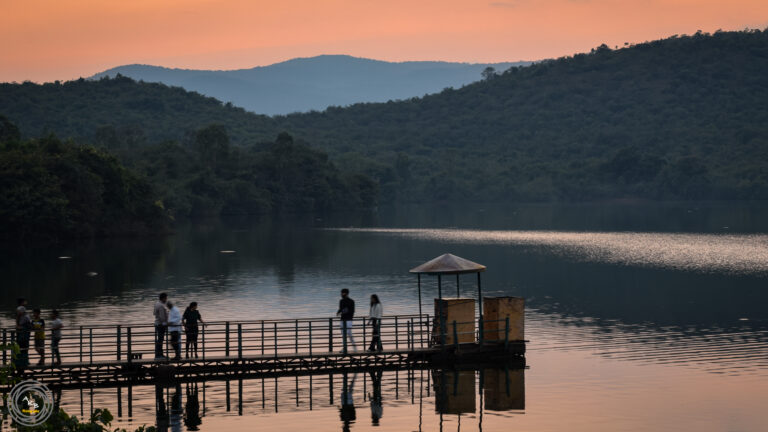
A body of water, pure and bright
The onward journey was exciting in the beginning, uneventful in the middle, and tiring at the end. The students were grouped for individual rooms, and they chose their roommates according to the room capacity – perhaps their first taste of freedom.
I remembered my first botanical field trip in Lava, a small hill station in northern West Bengal. As soon as we received the room numbers in Hotel Devika, three of us rushed to check the rooms and occupied the one with the best view of Kanchenjunga. It was in 2006, but I still remember the room, the view of the snow-capped mountains from the room, and our first taste of freedom.
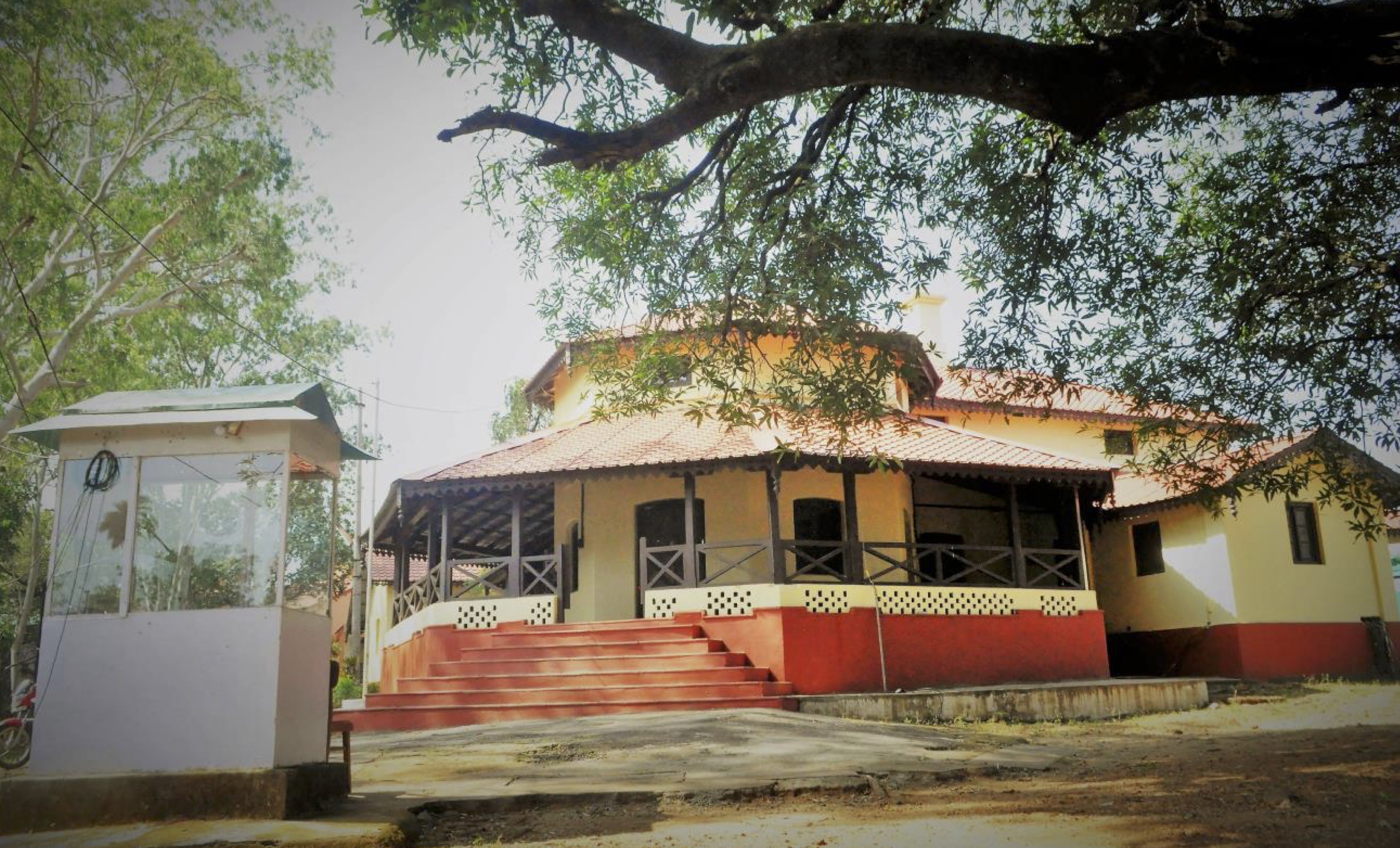
The lunch was ready. As was the plan, Akash and I went to the Bison Lodge. The lodge was the residence of Captain Forsyth, the man behind the discovery of Pachmarhi as a hill station, and is now a nature interpretation center and a museum. We bought tickets for a trekking route – we would enter the forest through one check post, trek to reach Ramya Kund, and come back through another route via Reechgarh. We entered the forest at 2:30 pm.
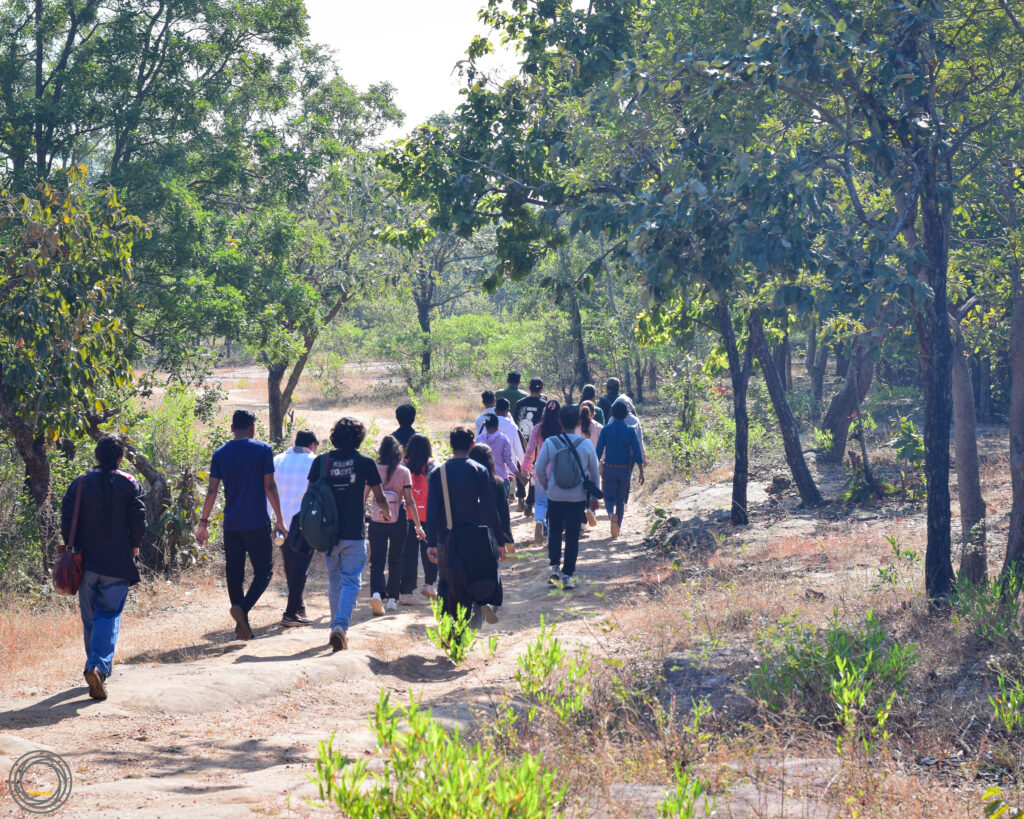
From the entry point to the Ramya Kund (kund means a small water reservoir), we walked in line with a local guide in front and me at the back. We stopped at intervals to take note of the roadside vegetation. The road alternated between uphill and downhill stretches. It took us nearly an hour to cover the one and a half kilometer distance. The Kund was waiting for us with its crystal-clear water, silently nestled within the hills. Ramya Kund is a spring-fed water body – groundwater emerges at the surface to feed the Kund.
Shelter for the bears
We stopped there for 30 minutes or so. Our legs needed some rest, but more importantly, the students needed to take photos, both solo and in groups. I assembled them again, and we started our return journey. From a spring-fed water body at the bottom of the hills, we ascended for the next 40 minutes to reach the peak of a hill dotted with numerous caves. The caves, as people believe, sheltered the bears during rainy seasons and gave the place its name, Reechgarh (reech means bear). Two giant rocks rest against each other to make an aperture big enough for the sun to peep through on its way back to the west after a long day.
Our bus was waiting for us at the Reechgarh gate. It was 5 in the afternoon, and our trek for the last 2.5 hours finally came to an end. It was a long and hectic day, and one could not blame fatigue for creeping in. Well, that was not true for the students.
The evening
As we came back from the trek and had our refreshments, the students requested to go to the market. I was a little bit hesitant for two reasons:
- I planned an evening session for the students with Dr. Chib, and I was not sure how I could tell her that the students were more interested in exploring the local market rather than the field station’s facilities, and
- It was dark outside, and the market was quite far from the field station. I was worried about their safety.
Dr. Chib solved the first problem. She cancelled the session and encouraged the students to go to the market, but with a clear instruction to come back before 8 pm, the dinner time. I asked the bus driver to take the students to the market in the vehicle itself. The vehicle was parked inside the field station, and it was a pain to bring it out on the road. Some minutes were lost in this process, and it was already 7:30 when they were finally ready to go. Spending just 30 minutes in the market seemed unfair to them, and I agreed to hold the fort for them till 8:30 pm. But they came back by 8:10 pm, as they found the market uninteresting and the items overpriced.
“Can we go there? We will take some photos and come back before sundown”, we asked one of our teachers on the field trip at Lava, pointing at a not-so-distant location. The place looked serene, and we wanted to see ourselves there and capture the moment.
“Not now; come back at your adulthood and then go there”, our teachers replied.
I could have done the same to my students while they asked for my permission to go to a market, but I had learned my lesson back then.
Akash and I accompanied Dr. Chib in between, as she gave a tour of the facilities in the field station. Apart from having the boarding and lodging facilities, the field station also has a genetic lab. Ecologists and conservationists from across the country who work on the central Indian landscape come here to execute their projects. Dr. Chib showed us the outreach materials which she and her team used for naturalist training, nature education to school kids, and bird monitoring workshops.
As the students came back, we had our dinners – simple yet delicious. After a long day, hot foods and cozy beds perfectly called the day off.
Day 2.0
Moments with Our Feathered Neighbours
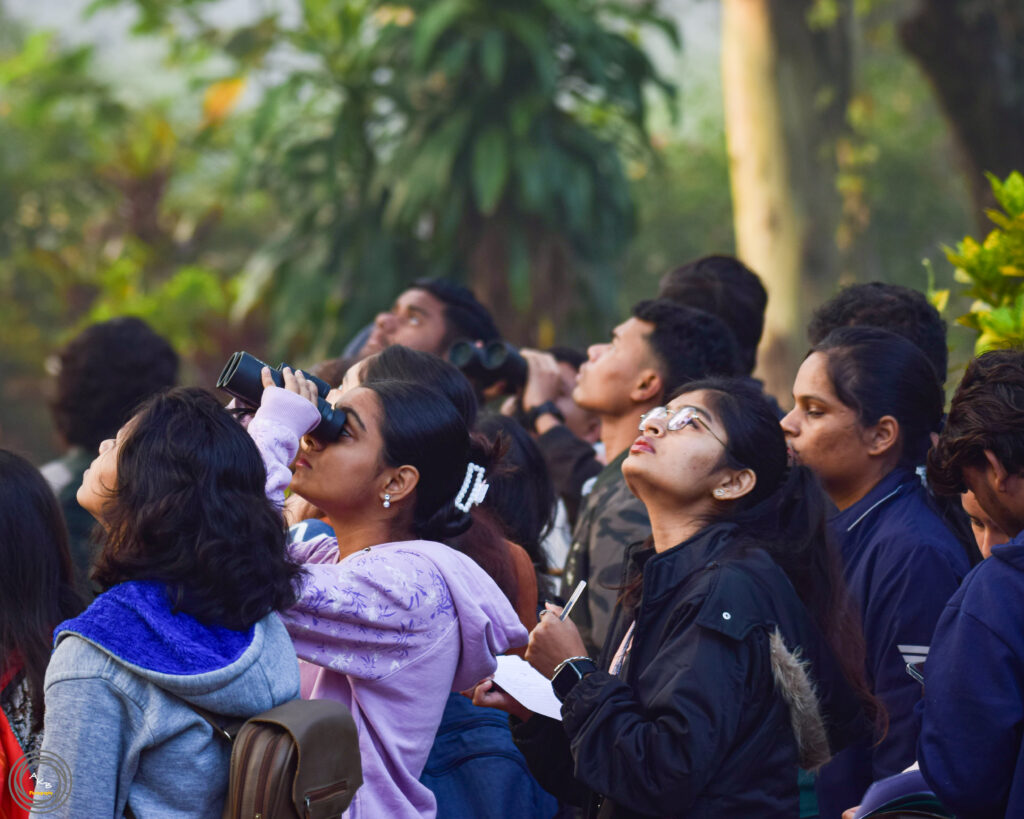
The morning awoke in hushed delight, and we were already outside on the lawn for a bird-watching session. We could hear their songs coming from all around us, and started tracing them to the treetops and shrubby bushes as the binoculars magnified our visionary abilities. The students noted the birds’ features in their notebooks that they were spotting. The session continued to the Boat Club Lake, just outside the field station. The session continued for 1.5 hours, and we wrapped it up at 8:30 am, just before breakfast.
New Day, New Trails
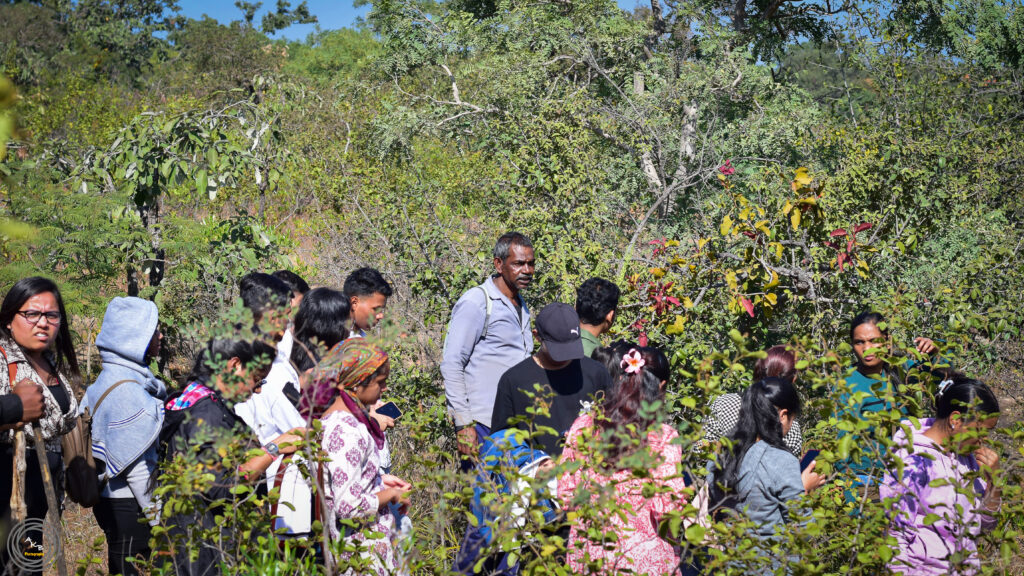
Today’s morning was reserved for another trek to the Mahadeo Hills‘ peaks and valleys. We went to the Bison Lodge for the tickets, but this time we had to pay for 2 guides; the number depends on the group size. Trekking through that route without a guide was not permissible. As we traversed the hilly terrain, I soon realized we could not make it without them.
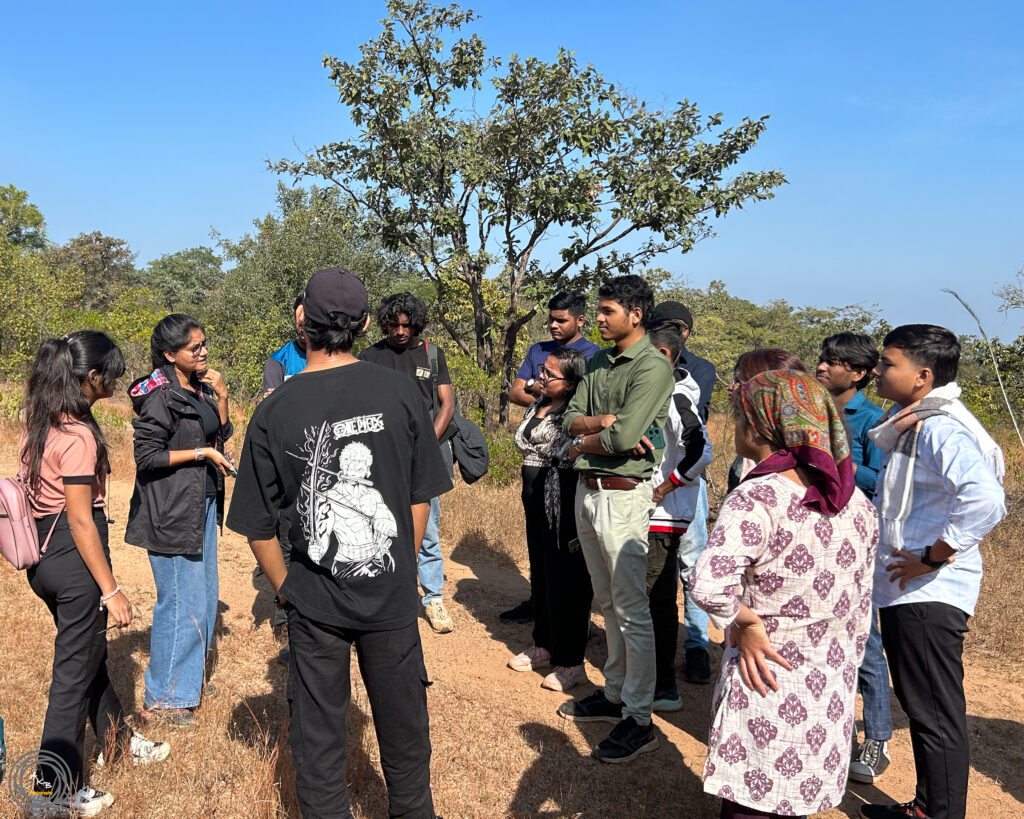
We started our journey from the valley floor at around 10:15 am along a dusty road that moved through bushes and scrub. We stopped in between to show the students how a GPS machine works and how they can use it in the field. And then, as if I knew, the road started climbing. Suddenly, the landscape started looking very familiar to me. After a few moments, I realized that I had walked this trail in my last excursion as a student.
It was in 2008 when I came here as an MSc Botany student from Presidency College, Kolkata. Pachmarhi was our first stop on a week-long excursion. In Pachmarhi, the trail we chose to explore and collect plant samples was this one, where, now, after 16 years, I am walking with my students. The same route, the same vegetation, and overall, the same enthusiasm to see what’s at the end of this trail.
The only difference between that excursion and this one was the absence of plant sample collection to make herbarium sheets. Dr. Chib mentioned
In tiger reserves, sample collection is only allowed with prior permission from the forest department, and they take it very seriously.
I hoped that back then, our teachers took proper permission, as we collected many plant samples during our walk, for ourselves as well as for our friends. Sample collection was considered a sacred duty while conducting a botanical excursion, and friendship and enmity were often forged on the plant samples collected.
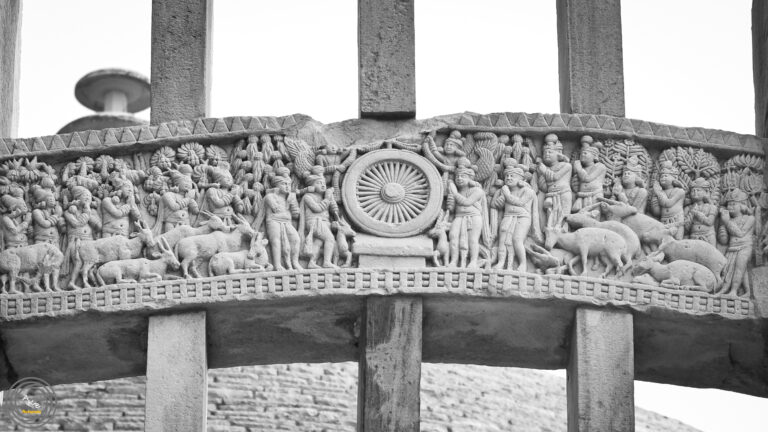
Ancient Art Upon the Stone
A small detour happened, as we had to see one of Madhya Pradesh’s richest collections of rock art. The colorful artworks are hidden in the depths of the mountains, which are often called the rock shelters. Our guides warned us that these rock shelters were situated at high altitude and it would be hard, but not impossible, to reach them. We accomplished that feat and found, in astonishment, varying numbers of figures painted in red, white, and yellow. Many paintings became faded because of their exposure to air and water for so many thousands of years. But human attempts to preserve these rock arts appeared to be feeble, as people made graffiti on and around these paintings.
The caves that bore the rock arts on their ceilings also aided Tatya Tope to use his guerrilla tactics against the British East India Company in the Sepoy Mutiny in 1857. In fact, the entire Mahadeo Hills with its hilly terrain and forested cover served as a strategic location for his movements and operations during the rebellion. Although our guides seemed to be pretty confident about this fact, I later could not find any historical account that could corroborate this story.
The Trail’s Last Bend
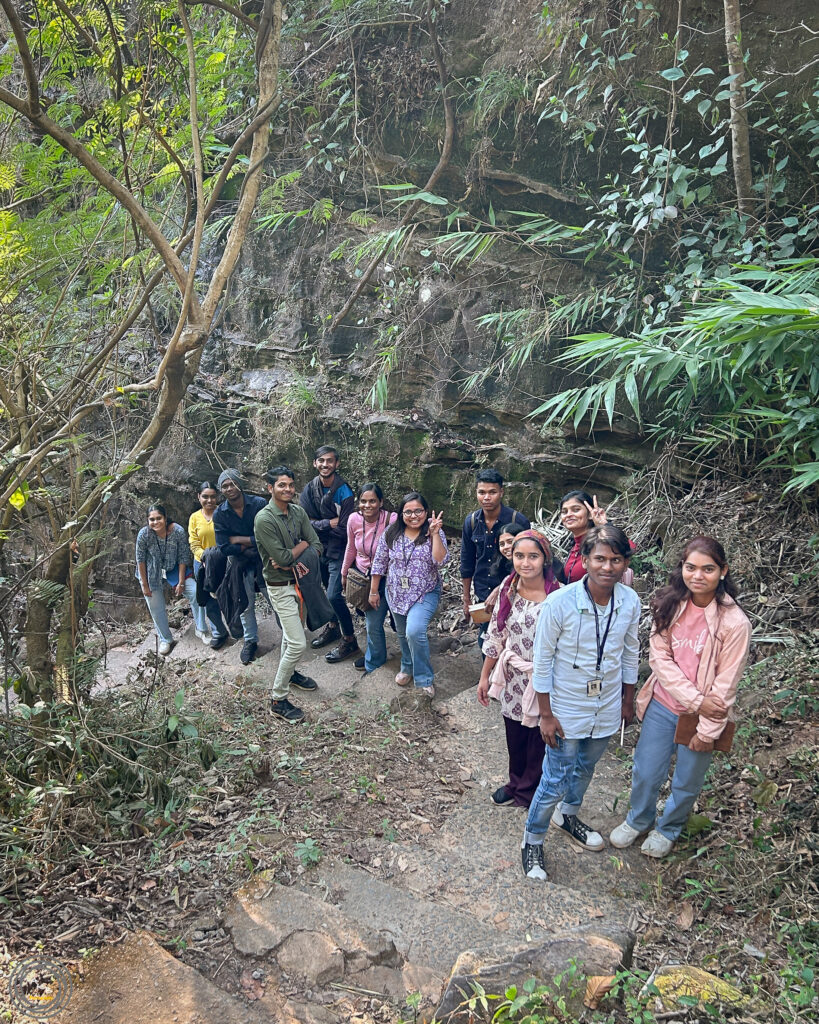
It was 11:45, and we were back on track to finish the trail. “What lies ahead?” someone asked. “A gorge”, my response matched that of the guide. Another 15 minutes and a narrow, deep descent: we were there in front of a deep gorge. There was a rickety staircase to help you further go down to a wet and flat rock bed at the bottom of the gorge.
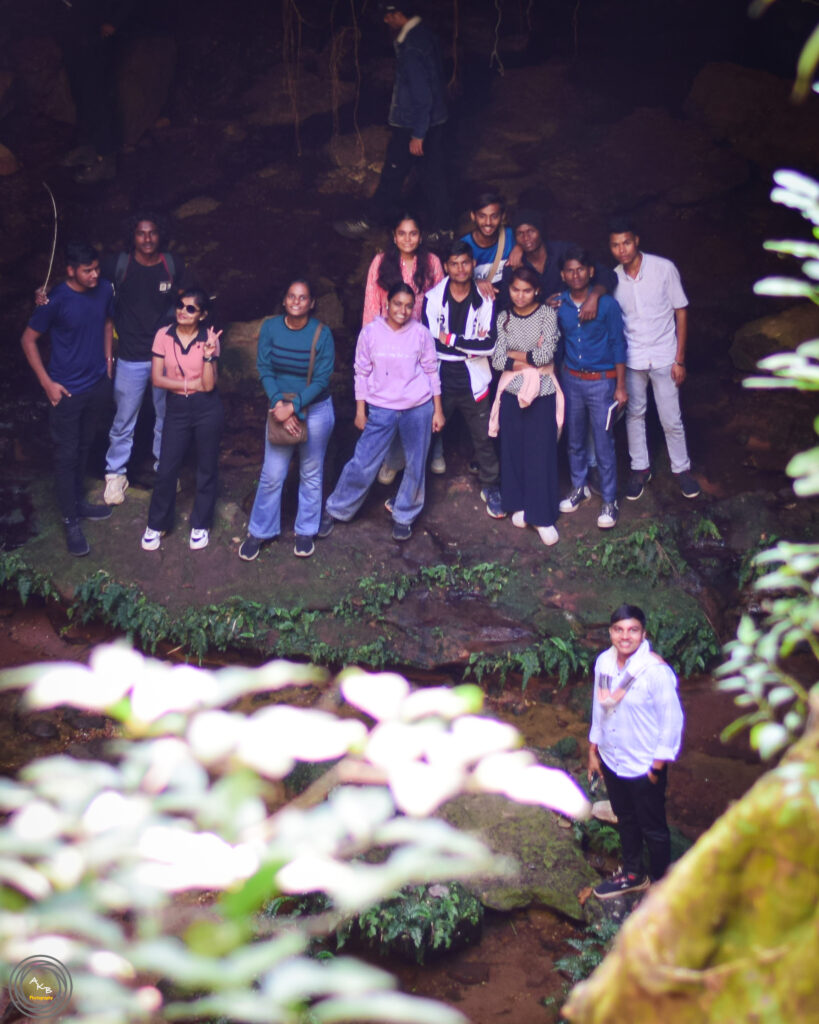
The staircase was not there. Two of us went down along the hilly slope – I and another student with two teachers. We needed to collect Selaginella, also known as spikemosses or lesser clubmosses. One species of this genus, Selaginella bryopteris, is often considered the famous Sanjeevani plant mentioned in the Ramayana, and is found in the Aravalli range of mountains in northwest India. But the species, S. exigua, can only be found in that gorge of the Satpura hills. The sample was so important that I had to go down on a slipper. I missed my steps a couple of times on that dusty and slippery terrain. The shrub trunks protected me from the gravity’s claim and the slick stones waiting beneath. I was wounded, yet happy to win the battle and come up with the samples in my hand.
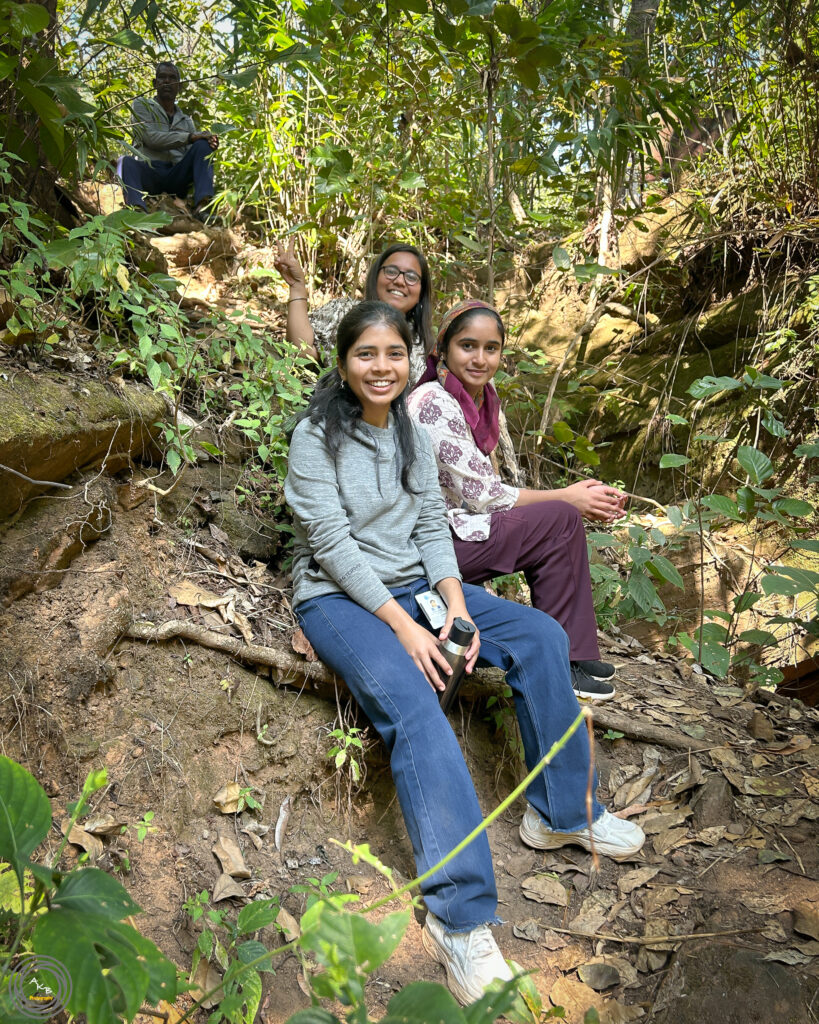
This time, I was in a proper gear, yet I decided to stay back with the three students and a guide. It was 1 pm when we started the return journey with exhaustion and happiness in the students’ faces as they completed the adventurous trek, saw the prehistoric rock art (they had not visited Bhimbetka), climbed down to a deep gorge, and navigated through its maze.
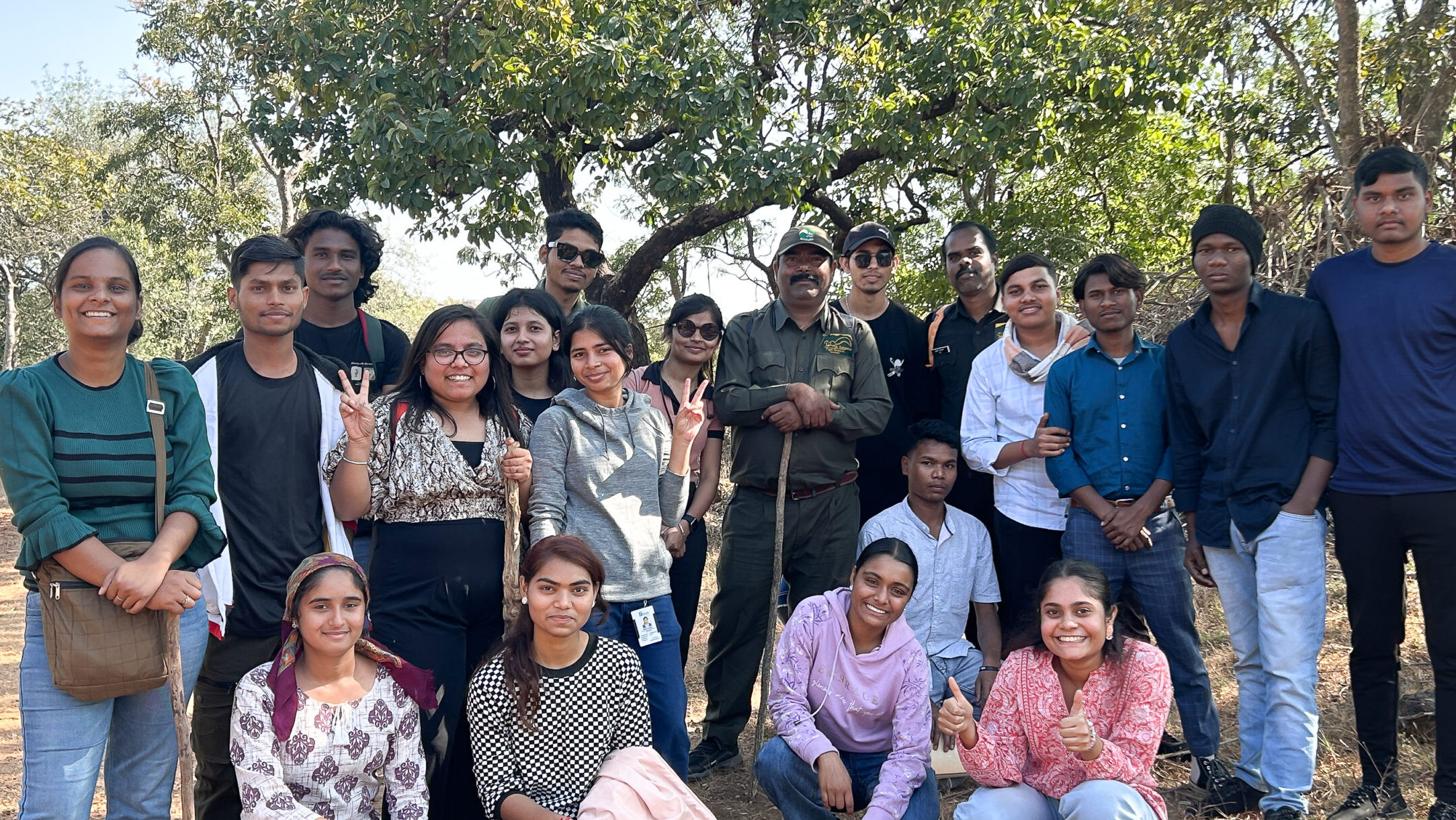
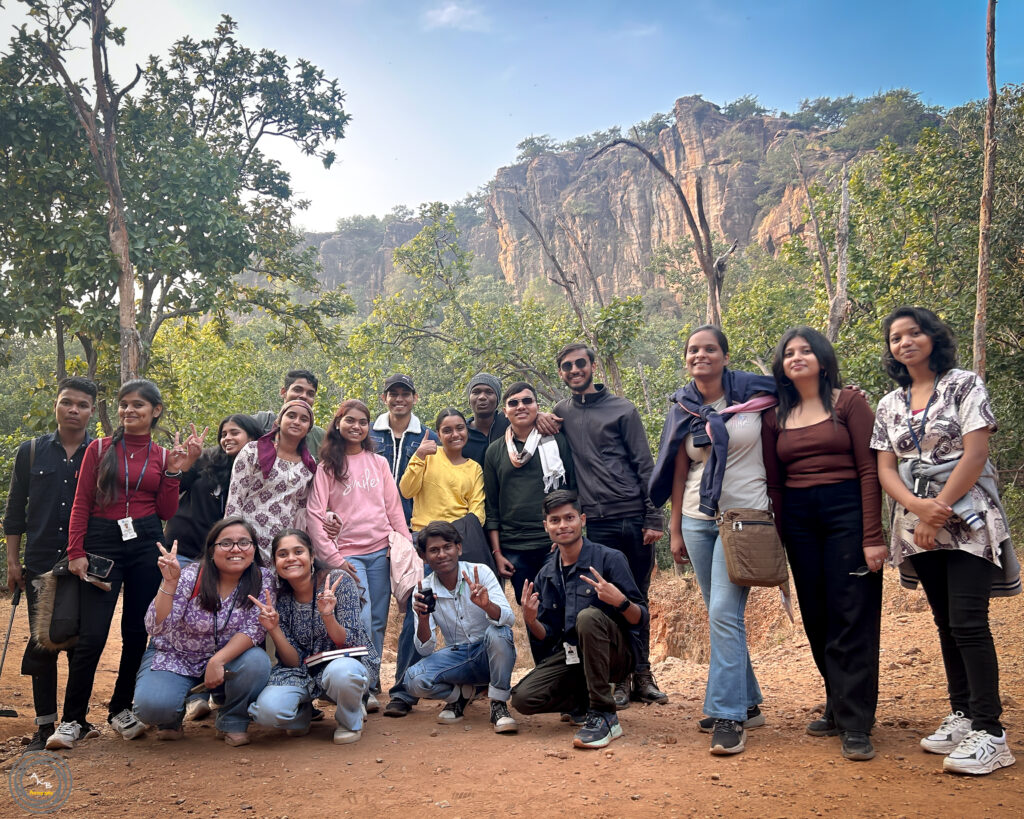
Before leaving for the field station, they wanted to take a group photo with the two guides, who not only helped them navigate through this terrain but also shared valuable knowledge about plants and animals that inhabit this landscape.
Day 2.5
Where the path concludes
And then there was nothing special. We had our lunch at the field station, packed our things, took a group photo with Dr. Chib on the iconic stairs of the field station, and then left for Bhopal. It was 3:45 pm. The vehicle broke down after one hour near Matkuli, and we waited on a bridge. The sun had started its descent and painted the Denwa River beneath us golden yellow. It was already 5 pm, and it would take another 5 hours to reach the university. The students would not get dinner so late at night in the cafeteria. So, I decided to stop at a roadside Dhaba.
I could have disembarked sooner, at a crossing with my other colleagues. But I chose to finish the journey with my students. I chose not to abandon the ship just because I was tired, and I had to drive my two-wheelers on a dark highway so late at night. It was 11 pm when we finally reached the university.
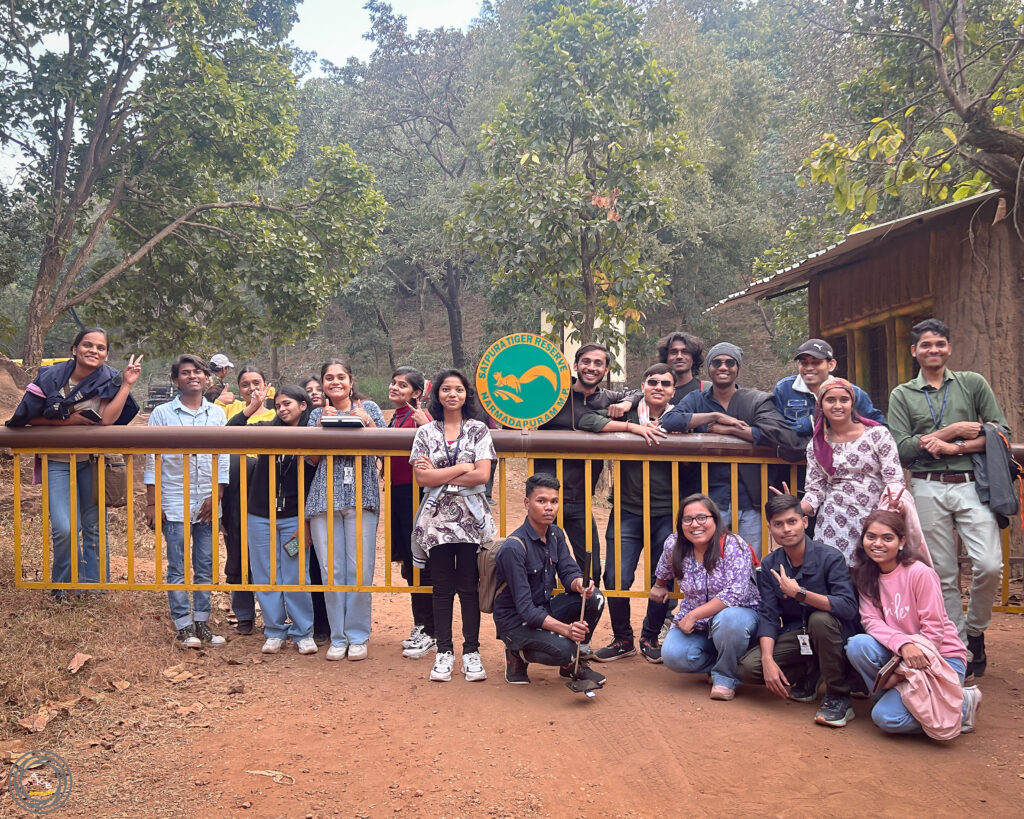
They would go to Pachmarhi again, as I did to all my botanical excursion places, sometimes for work, sometimes for a pleasure vacation. But their memories of this first visit will be with them forever, like a good perfume with a strong adhesive note. This trip will always remain special for me for two reasons: it is my first as a teacher (and we seldom forget them), and more importantly, it made me walk down a memory lane. Next year, I will probably return here, with a new batch of students, to rejuvenate myself and give them memories to be cherished for their lives.