Among the 131 species of the Coffea genus, two species, Coffea arabica (commercially known as arabica) and Coffea canephora (commercially known as robusta), are most widely cultivated on a global scale. The coffee plants originated in Africa, specifically Yemen, in the mid-15th century. For the next few centuries, humans aided the dispersal of the species across the world, driven by simple curiosity and religious practices, or due to its importance as a cash crop.
The accounts of the discovery of coffee as a drink in Africa and its subsequent spread to Asia, Europe, North America, and the Caribbean Islands are fascinating. You can read it here.
Coffee comes from the plant’s fruit, which we often call cherries. Each of these small, red-coloured cherries has two seeds or ‘beans’, which we use to brew the beverage.
Coffee in India
India is not a coffee-loving country at all. While the global average of coffee consumption is 200 cups per annum, the number in India stands at only 30 cups. In fact, I could not remember any of my family members fond of this drink, except for some occasional winter-evening get-togethers. On those occasions, we had instant ‘Nescafé’ coffee spooned into hot milk and sugar. But somehow, I developed a taste for roasted and ground coffee beans over the years.
So, today, when the world drinks about two billion cups of coffee a day, five of them are mine. Now I can happily tag myself as a ‘coffee-person’ in the office or at family gatherings. And I never missed adding colour and sweetness to my preferred brew — ‘black and without sugar’.
That coffee is not indigenous to India came to my knowledge when I was doing my PhD on exotic plants. But it was on my trip to Chikmagalur in 2021 when I came across the legend of ‘seven seeds’ associated with the arrival of coffee to India.
The legend
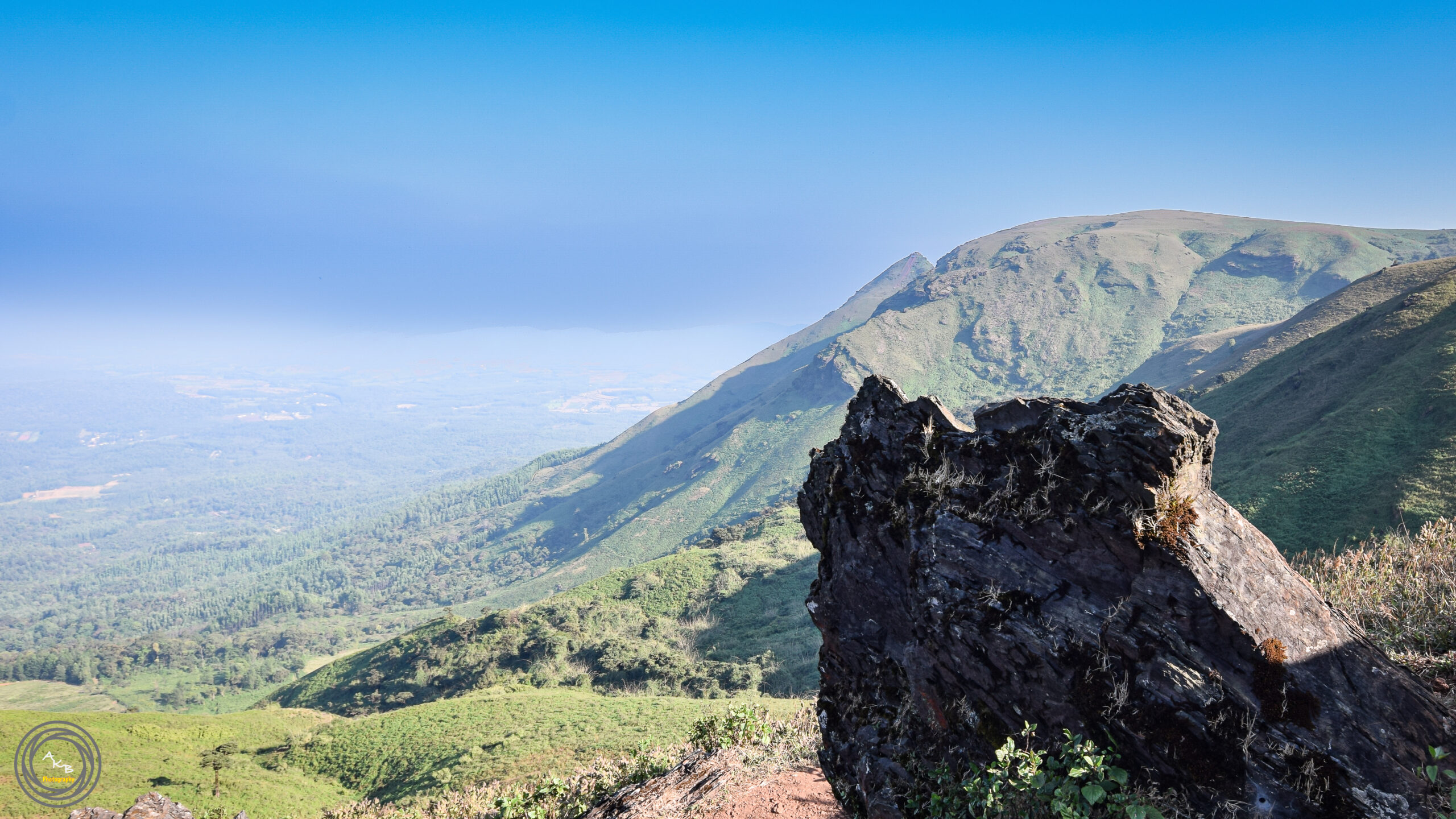
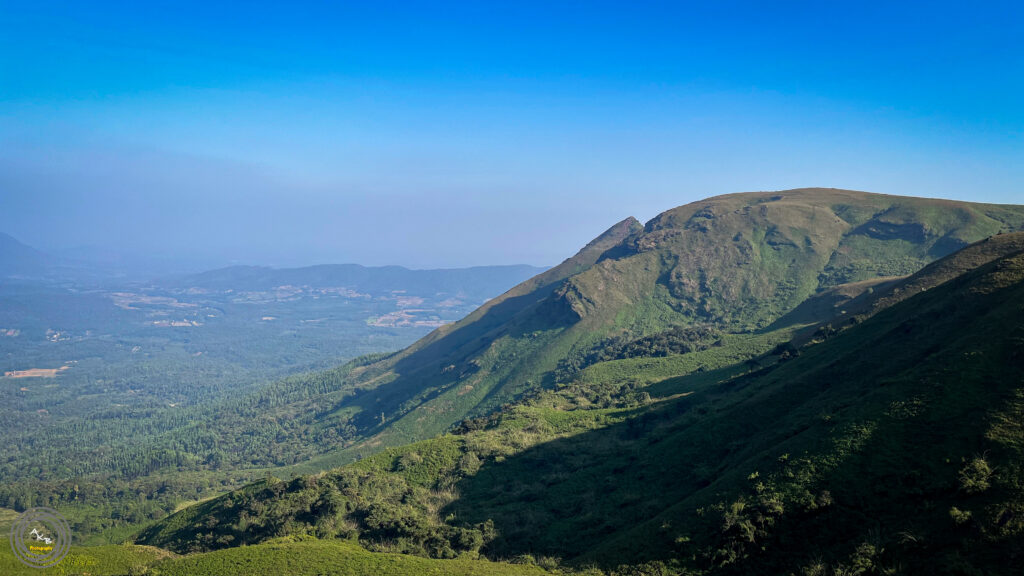
It was our last stop on the Chikmagalur sightseeing trip (check my other post from this trip). And we were standing in front of the second-highest peak in Karnataka, the Baba Budangiri. It is 25 km from Chikmagalur town towards the north and around 270 km from Bangalore.
The 1895-meter peak lies at the end of a trekking journey. It is one of the prime trekking places in Karnataka, and people were trekking the lush green landscape of the Chandra Drona Parvat (=mountain) Shreni (=range), another name of the Baba Budangiri mountain range, due to its crescent moon-shaped structure. From a distance, they looked like ants climbing up a hill. We soon joined the procession.
It was here that I first heard the name of Baba Budan, a Sufi Muslim Cleric of the 17th century. Located amongst three caves at the start of the trek, there is a Dargah or shrine of Baba Budan, which still serves as a pilgrimage site for both Hindus and Muslims.
Baba Budan lived in the Indian province of Mysore. As per the community practice, he undertook the sacred pilgrimage (Hajj) to the city of Mecca. At that time, from India, Hajj was a long journey on camelback through the land route passing through Africa into Yemen. In Yemen, Baba Budan came into contact with other clerics and discovered that some of them habitually consumed a dark drink. The clerics told him that the qahwa (the drink in question) was aromatic, and when consumed warm, it gave them energy in attending calls to prayer. Baba Budan found these accounts fascinating. Within a few days, he became an avid drinker of qahwa.
As a scholar, Baba Budan started learning about the drink’s origin. He came to know about the fruit from which this drink was made. As he knew more and more, it became clear to him that the plant could be grown in his homeland. He had a place in mind, very near to his home – the hills of Chandragiri. But there was a problem.
The ruling Ottoman Empire had very strict rules for taking coffee plants outside Yemen. Only the roasted coffee beans were allowed to be exported. If Baba Budan wanted to take a live plant or seed from Yemen to India, he had to do it illegally. And he exactly did that.
There are many versions of how he did it. The most popular version is that he concealed seven seeds within his beard and evaded discovery during inspection at the port city of Mocha. Baba Budan chose the number ‘seven’ for the smuggled seeds for a particular reason.
He feared that he had to answer to his own people or the Government for his smuggling activity. But seven being a sacred number in his faith, he could defend his actions as a religious act.
I don’t know if Baba Budan had to justify or defend his act anywhere else after coming back to India.
But one thing is certain. He planted these seeds in the hills of Chandragiri as planned, and India got its first coffee crop. We can still find coffee plants growing along the slopes of the hill, which is now known as Bababudangiri, in the revering memory of the saint.
End note
As is the case with others, the legend of Baba Budan should be taken with reservations. However, there is no denying the facts that:
- Coffee made its way to India in the early 17th century
- It is still growing in the Chikmagalur region; in fact, the town is one of the country’s highest producers of coffee and is often called ‘the birthplace of coffee in India.’
- The British and the Dutch traders introduced coffee from South India to other Asian countries starting from the late 1600s. It reached Europe and the New World (Latin America) by the 17th century.
If you can believe in the tale of Baba Budan, those seven seeds would become the seeds of the world’s first commercial coffee industry outside of Africa and Arabia.