
Two years ago, my career concentration shifted from research to teaching. The journey started with 36 undergraduates in a new campus of a private university and a course lying in the periphery of my expertise. My challenges were formidable, including teaching a number-heavy topic to students who disliked mathematics and navigating a language barrier in the classroom. But the semester helped me develop new pedagogical techniques, gave me confidence, and ultimately bestowed upon me a new identity.
The transition
I joined my new workplace 2 years ago. The transition from my past association to this new place happened very fast — within one month. And quite a few things changed in my life, suddenly:
- From China to India – 2 neighbors but with completely different cultures, people, foods, and everything in between
- From Guangzhou to Bhopal – from a business hub and one of the most prosperous cities in China to a tier-2 city in India
- Public to private – not just from a public to private university, but also from a city with affordable public transport to a city where private vehicles are indispensable
But the biggest shift happened in my career trajectory – from hard-core research to dedicated teaching. I decided to put away my scientific journals to the side and lend my hand to the molding of minds. It was not easy for me, more so because the leap was great in terms of the courses that I was going to teach in my first semester.
The challenges
It was January 15, 2024. A Monday — a new semester was going to start. Second for the campus, and first for me. And the first class of the semester would start with my class. I was given the course ‘Quantitative Thinking for Biologists’ to teach.
I thought I was prepared enough to take on the first class. After joining in December 2023, I used the last month to prepare myself — familiarized myself with the course document, made the class notes and slides, and, more importantly, tried to gain confidence to teach a class of 36 students a subject that I was not so familiar with. I had experience teaching very specialized topics related to my subject, plant ecology, and that too in a class of postgraduate and doctoral students.
That morning, I was going to teach quantitative biology to a bunch of undergraduate students, and the challenges in front of me were formidable:
- A subject I was not in touch with very frequently, certainly not at the very basic level
- A group of students, most of whom took biology after 10+2 because of their dislike of mathematics
- Had no idea how to make a number-heavy topic interesting for the students (and for myself, of course)
I still remember the shivering I felt that morning — partly because of the January winter, but mostly because of my thoughts of how I would fare in this new journey of my life and career.
The semester
I went to the class. And since that day, I spent 90 minutes every Monday and Thursday with the students for the next four months. Some sessions went wrong or did not go as I expected; some topics I didn’t like to teach; some assessments were too hard for my students.
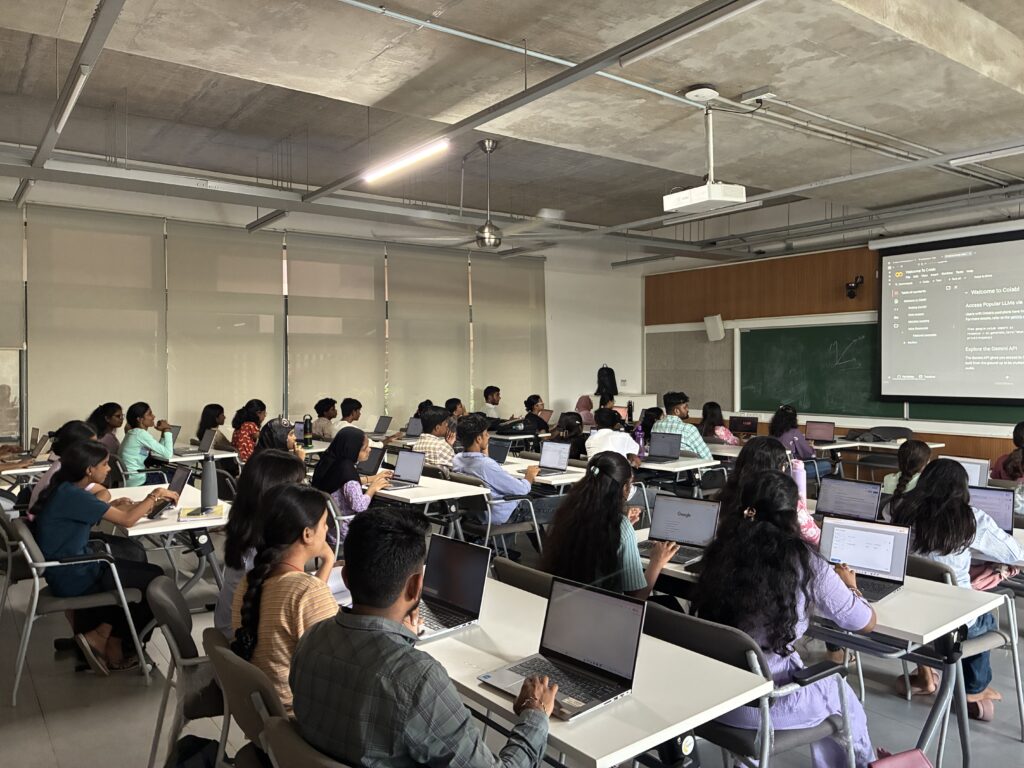
But at the end, the whole process, starting from preparing for the class to taking assessments to grading, had been a learning experience for me. It was the first time in my life that I taught a semester-long course all by my own, and here are my realizations:
- The course was a mix of theoretical understanding and technology application. The course gave me ample opportunity to revisit some theoretical concepts like scalar and vector, matrix and data frame, slope and intercept, probability and distribution. I had a more practical understanding of these things in my research career, but I had to dig deeper into the topics for my students.
- Using R for my research and working hands-on with the students were two completely different ball games. I had learnt how to reduce my pace while navigating through the different options in the software and how to make every operation logical for my students.
- Power points and class notes were not enough; I had to make practice sets for each topic I taught. I tried to complete the syllabus, which I am now not sure should be the teacher’s only aim, and therefore, arranged extra classes to compensate for the holidays.
- I did not have an idea how much the assessment system in India had changed. Instead of a twice-a-year examination, now comes the concept of continuous assessment. And the formats of these assessments are just not in-class pen and paper — there are group tasks, small quizzes, and take-home assignments.
- While I understand the group works for peer learning and quizzes to keep the students in regular touch with the subject, I had, and still have, some reservations about the take-home ones. To me, they are nothing but just the safety nets for the students to pass the course.
- Interesting was the grading scheme for class participation. The course document was vague on how to grade students in this assessment. I made this assessment to a continuous feedback collection mechanism. Every week, each student had to share their likes and challenges related to the course and the classroom, along with the name of one thing that they had learnt and one thing that they would like to change. I always tried to read them all to motivate myself from the positive feedback and to upgrade my teaching from their genuine concerns.
The result
And even after all these, a few failed this course. Some of my colleagues asked me, “Are you not going to make them pass?”
Surprised, I asked, “Why would I do that?” That’s now how we were assessed when we were students.
“A new campus, and someone might ask you to do the same. You know, just for the sake of the campus’s image”. They told me.
“No”, I said, “I have completed the course with integrity, and I want to maintain the same while assessing them. Besides, even if I want, I can’t just randomly increase numbers — it’s a quantitative subject, not some descriptive answers that I am checking.”
But I was happy with the overall performance of the class, especially for a heterogeneous classroom like that. The heterogeneity was not only in their socioeconomic backgrounds and learning abilities, but also in their interests in a new subject related to numbers and calculations. I could not pass my enthusiasm to all of them.
One reason could be my inability to speak in Hindi. Language of instruction was a barrier that I struggled to cross in the classroom, as many students might find it difficult to follow the course in English. I used Hindi rarely in the classroom, but always in private discussions and one-to-one doubt clearance sessions with the students. I clarified my language limitation to them in the very first class, and they agreed. Perhaps they thought that it would improve their communication skills in English.
End note
The course came to me with lots of challenges, but it taught me new pedagogical techniques, helped me learn new things, and, more importantly, gave me confidence and a new identity. I taught this course again in the January 2025 semester, and even did an in-house interview session with our Communications Consultant on ‘Why Ecologists Need Numbers’.
Some students from my first batch shared my enthusiasm, and we started a students’ club called the Quant Society. New courses with quantitative components started to be assigned to my name, and before I knew it, I conducted two summer courses to provide foundational quantitative support to the new students.
This semester, I am not teaching it anymore. A new challenge is on the horizon – a new transition from plant ecology to political ecology is waiting for me.



[…] a quantitative biology course that had little or no scope for a field trip (read that experience here). The opportunity came at the end of my first year as a teacher: me supervising 21 students on a […]